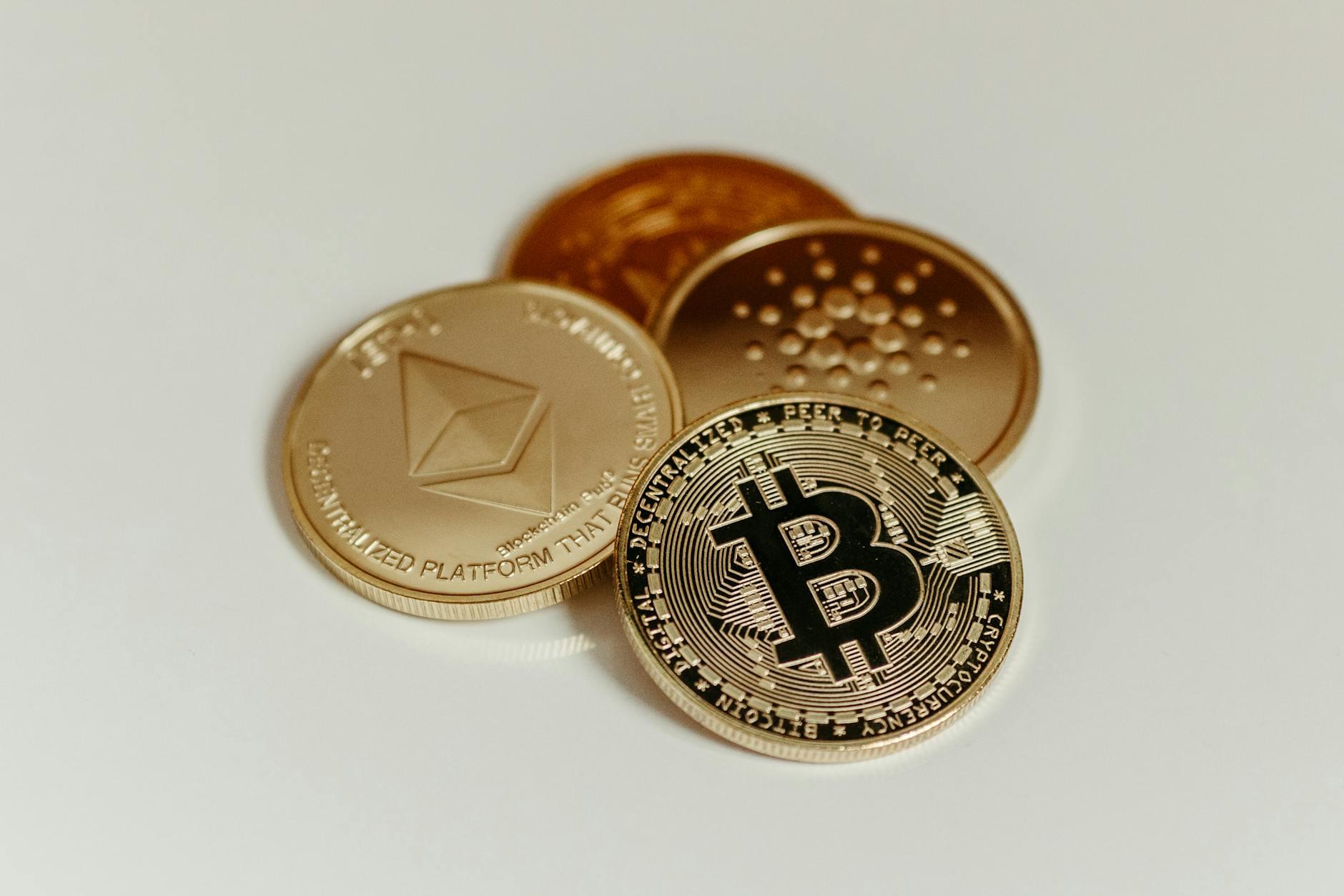
Cryptocurrency has gone from a niche topic to a global financial movement. With thousands of digital coins in circulation, it’s easy to feel overwhelmed. Knowing which ones stand out can make all the difference for investors and enthusiasts alike. Whether you’re planning your next move or just curious, understanding the top coins of the future is a smart step forward.
Bitcoin (BTC): The Pioneer
Bitcoin isn’t just another cryptocurrency; it’s the original, the one that started it all. From its mysterious creation to its current status as a global force in finance, Bitcoin has rewritten the rules of money. Here's why it remains at the top of the cryptocurrency world.
Bitcoin's Origins
Bitcoin was introduced to the world in 2008 when an anonymous innovator, or group, known as Satoshi Nakamoto published the Bitcoin whitepaper. The timing couldn’t have been more significant—it followed the global financial crisis, highlighting flaws in traditional systems.
The goal was simple but revolutionary: create a decentralized form of money that didn’t rely on banks or governments. Bitcoin operates on blockchain technology, a secure and transparent ledger system that ensures every transaction can be verified without the need for intermediaries. Unlike traditional currencies, Bitcoin has a finite supply—only 21 million coins will ever exist—making it immune to inflationary policies.
By solving the double-spend problem through proof-of-work, Satoshi laid the groundwork for an entirely new kind of financial freedom.
Store of Value
Bitcoin is often called "digital gold", and for good reason. Just like gold, Bitcoin is seen as a store of value, especially during economic uncertainty. While stock markets can be volatile and traditional currencies devalue due to inflation, Bitcoin offers a hedge against these risks.
But why this comparison to gold? Here’s a breakdown:
- Scarcity: Bitcoin has a fixed supply, much like gold reserves are finite.
- Durability: Bitcoin doesn’t corrode or degrade—it exists eternally in digital form.
- Portability: Unlike gold bricks that are cumbersome to move, Bitcoin allows you to carry millions in your pocket through a smartphone or hardware wallet.
Investors often view Bitcoin as a modern-day safe haven asset. While it doesn’t have the thousands-of-years history gold enjoys, Bitcoin’s resilience and adoption over the last 14 years have cemented its reputation.
Adoption and Impact
Bitcoin’s mainstream adoption has soared over the years. Tech giants like Tesla and financial firms such as Square (now Block) have added Bitcoin to their balance sheets, signaling strong corporate belief in its future. Additionally, companies like PayPal and Visa now facilitate Bitcoin transactions, making it more accessible to the average user.
In the geopolitical arena, Bitcoin achieved a historic milestone in 2021 when El Salvador became the first nation to adopt it as legal tender. This bold move allowed citizens to use Bitcoin for daily transactions like paying for groceries or taxes. Shortly after, the Central African Republic followed suit. Advocates believe this adoption could provide financial inclusion to millions in underbanked regions.
Beyond corporations and countries, Bitcoin's impact stretches to global economics. It empowers people in places with unstable currencies, offering them a way to preserve wealth without government interference. Think of it as a modern financial lifeline—one that doesn’t care about borders or politics.
The story of Bitcoin is far from over. Its adoption, use cases, and role in reshaping economies will continue to grow, leaving an undeniable mark on both finance and technology.
Ethereum (ETH): The Smart Contract Innovator
Ethereum isn’t just another cryptocurrency; it’s the technology that expanded the possibilities of blockchain far beyond simple financial transactions. Introduced in 2015 by Vitalik Buterin and a team of developers, Ethereum opened up a new world of decentralized innovation. From smart contracts to an entire ecosystem of decentralized applications (dApps), Ethereum has become the backbone of blockchain-based functionality.
The Smart Contract Revolution
Ethereum introduced smart contracts, setting it apart from Bitcoin and other earlier cryptocurrencies. Think of smart contracts as self-executing agreements embedded with code. They automatically execute transactions or actions when certain conditions are met, removing the need for intermediaries.
Why is this such a big deal? Traditional contracts rely on trust and middlemen, like banks or lawyers. Smart contracts eliminate this by ensuring a transparent, automated process. For example, imagine selling a house: the funds and property transfer could occur automatically once the agreed conditions are fulfilled, with no third party needed.
Ethereum’s innovation didn’t stop there. These smart contracts became the foundation for dApps—applications that run on the blockchain, offering endless possibilities in industries such as finance, gaming, and supply chain management. The power of Ethereum lies in turning blockchain technology into a platform for creativity and problem-solving, giving developers a toolkit to build just about anything.
Ethereum 2.0 Upgrade
Ethereum’s early success also came with growing pains. High demand overloaded its network, causing slower transaction speeds and higher fees. To tackle this, the Ethereum network began transitioning to Ethereum 2.0, an upgrade focusing on scalability, security, and sustainability.
The headline change? Shifting from Proof-of-Work (PoW) to Proof-of-Stake (PoS). This new system drastically reduces the energy required to validate transactions and secures the network. Instead of miners competing to solve complex puzzles (as in Bitcoin), validators are chosen based on the amount of Ethereum they "stake" as collateral. This shift has cut Ethereum’s energy consumption by over 99%, making it far more environmentally friendly.
Beyond sustainability, Ethereum 2.0 offers scalability improvements through a technique called sharding. By splitting the network into smaller sections (or shards) that process transactions simultaneously, Ethereum can handle far more traffic, paving the way for widespread adoption.
Ecosystem Growth
Ethereum isn’t just a cryptocurrency—it’s the lifeblood of a sprawling blockchain ecosystem. Its ability to support dApps has fueled the rise of groundbreaking sectors like Decentralized Finance (DeFi) and Non-Fungible Tokens (NFTs).
Take a look at some key areas of Ethereum’s growth:
- Decentralized Finance (DeFi): Ethereum powers a range of DeFi platforms like Uniswap, Aave, and Compound, where users can lend, borrow, and trade without banks.
- NFT Boom: Ethereum became the go-to platform for creating and trading NFTs, digital assets representing ownership of unique items like art, music, or collectibles. Projects like Bored Ape Yacht Club and CryptoPunks have become cultural phenomena.
- Corporate Partnerships: Major companies such as Microsoft, JPMorgan, and Ubisoft are leveraging Ethereum for enterprise solutions and blockchain experimentation.
Ethereum’s ecosystem keeps growing, supported by an active developer community and a steady stream of new projects. As the underlying infrastructure for Web3, Ethereum is not just a coin—it’s an entire blockchain economy.
Binance Coin (BNB): Fueling a Global Exchange
Binance Coin, often referred to as BNB, is more than just a cryptocurrency. It powers one of the largest and most influential crypto exchanges in the world, Binance. What started as a simple utility token has transformed into a driving force in the blockchain ecosystem. Let's explore how BNB fuels the Binance platform and expands its presence in the crypto space.
Utility of BNB
At its core, BNB was created to support the Binance ecosystem, and its utility has grown significantly since its launch in 2017.
Here’s how BNB makes life easier for its users:
- Transaction Fee Discounts: When users trade on the Binance exchange and choose to pay fees using BNB, they receive discounts. Initially offering a 50% reduction, this incentive encourages widespread adoption of BNB within the platform.
- Token for Services: Beyond trading fees, BNB can also be used for various Binance services, including launchpad participation, staking in certain projects, and even purchasing products or services from Binance's partners.
- Governance and Voting: BNB gives holders a voice in the Binance ecosystem. Through Binance Smart Chain (BSC), it’s used to vote on protocol upgrades or proposal developments, empowering users to influence the network’s direction.
BNB’s practicality as both a discount token and governance tool gives it multifaceted value. By actively integrating BNB into every layer of its business, Binance ensures that holding and using the token remains advantageous for its users.
Binance Smart Chain
If Ethereum’s flagship use case is smart contracts, Binance Smart Chain (BSC) takes on Ethereum as a direct competitor. Launched in 2020, BSC combines low transaction fees with fast processing times, making it an attractive choice for developers and users alike.
But what truly sets BSC apart?
- Compatibility: BSC is fully compatible with Ethereum’s Virtual Machine (EVM), making it easy for developers to migrate their decentralized applications (dApps) from Ethereum. Essentially, what works on Ethereum works on BSC—with less friction.
- Affordability: Skyrocketing gas fees on Ethereum have driven many projects to explore alternatives. BSC offers significantly cheaper fees, helping smaller developers and users participate without fear of high costs.
- Speed: With faster block times, BSC processes transactions quickly, providing better functionality in environments like DeFi protocols and NFT marketplaces.
Led by the performance-focused BSC, Binance has carved out a space in sectors once dominated by Ethereum. From DeFi platforms like PancakeSwap to NFT marketplaces and gaming projects, BSC has enabled a diverse ecosystem of innovation.
Ecosystem Expansion
Binance isn’t just stopping at having the largest trading exchange—it’s aiming to expand in every direction of the blockchain ecosystem. Through strategic investments, partnerships, and projects, Binance supports not just its own growth but also the broader adoption of blockchain technology.
Here are some initiatives worth noting:
- Binance Labs: Acting as Binance’s venture capital and innovation arm, Binance Labs invests in new blockchain projects that have the potential to push the industry forward. Successful projects like Axie Infinity and Polygon received early support, accelerating their rise.
- Global Partnerships: Binance has teamed up with fintech companies, payment processors, and even governments to bring crypto integration to new markets. Notable examples include partnerships with payment platforms like Simplex for crypto-to-fiat services.
- Education and Advocacy: Binance actively promotes financial inclusion by educating users about blockchain. Platforms like Binance Academy provide free resources aimed at breaking down technical barriers for newcomers.
- Binance NFT Marketplace: Tapping into the NFT wave, Binance launched its marketplace to offer NFT creation, buying, and selling, making NFTs more accessible to everyday users.
The ongoing efforts by Binance mirror its ambition to become more than an exchange—it strives to be a cornerstone in the future of decentralized finance and the blockchain world.
BNB’s role in powering this vast ecosystem cannot be overstated. From smart contracts on BSC to discounts and governance tools, it’s not just another crypto coin—it’s the foundation of a truly global blockchain enterprise.
Cardano (ADA): A Science-Driven Blockchain
Cardano stands out in the cryptocurrency world as a blockchain built on academic rigor and scientific approaches. Unlike other projects that rush development to capture market share, Cardano prioritizes research-based innovation and proven methodologies. Its visionary roadmap has positioned it as a blockchain built for security, scalability, and sustainability.
Cardano's Development Philosophy
Cardano’s approach to development is rooted in peer-reviewed research and scientific principles. Every upgrade and feature undergoes rigorous examination by academic and blockchain experts before implementation. This process ensures that Cardano’s foundation remains robust and resilient over time.
The blockchain was co-founded by Charles Hoskinson, one of Ethereum’s early developers, with a mission to address the shortcomings of first and second-generation blockchains like Bitcoin and Ethereum. Cardano uses a layered architecture, separating the transaction and computational layers, to maximize flexibility and scalability.
One notable feature of Cardano's research-driven philosophy is its use of formal verification. This is a mathematical process to ensure code and algorithms behave exactly as intended, reducing the likelihood of bugs or exploits. For users, this means Cardano delivers a level of security unmatched by many other blockchain projects.
By building Cardano incrementally and basing its decisions on solid research, it aims to ensure that its foundation can support real-world applications for decades—rather than requiring frequent overhauls.
Proof-of-Stake Leadership
Cardano has been a pioneer in the adoption of energy-efficient blockchain technology through its Ouroboros Proof-of-Stake (PoS) consensus mechanism. Unlike energy-intensive Proof-of-Work systems, which require mining rigs to solve complex puzzles, PoS allows validators to secure the network simply by staking their ADA tokens.
Ouroboros is the first PoS protocol to be built on peer-reviewed research. It strikes a balance between security, decentralization, and energy efficiency. The protocol uses random leader election, ensuring the selection process is not only fair but also environmentally sustainable.
Here’s why Cardano’s PoS mechanism is groundbreaking:
- Energy Efficiency: By design, Proof-of-Stake systems use 99% less energy compared to Proof-of-Work. This makes Cardano more eco-friendly than Bitcoin and Ethereum’s original PoW models.
- Incentives for Participation: ADA holders are encouraged to participate in staking, earning rewards while contributing to network security.
- Decentralized Validation: Unlike centralized mining pools dominating PoW networks, Ouroboros enables broader participation in transaction validation, enhancing decentralization.
Cardano's leadership in PoS technologies inspired other blockchains, including Ethereum, to transition to similar models. Its role as a sustainability pioneer has positioned it as a smart choice for environmentally conscious developers and investors alike.
Real-World Applications
One of the most compelling aspects of Cardano is its practical focus on solving real-world problems. Its blockchain has been deployed for innovative projects, especially in developing regions, emphasizing the platform’s commitment to global impact and sustainability.
Digital Identity Solutions
A standout example is Cardano’s work with Atala PRISM, a decentralized identity solution built on the Cardano blockchain. Atala PRISM empowers individuals by providing secure and verifiable digital identities. This is especially beneficial in countries where traditional systems are lacking, enhancing access to education, financial services, and governmental functions.
For instance, Cardano partnered with the Ethiopian government to implement a blockchain-based identification system aimed at tracking academic performance for over 5 million students. This system reduces paperwork, improves transparency, and enables better access to higher education opportunities.
Supporting Financial Inclusion
In regions where people remain unbanked, Cardano opens doors to financial services through blockchain. Smart contracts can facilitate microloans, enable transparent transactions, and bypass oppressive financial intermediaries. Its lightweight infrastructure makes it accessible even in areas with low internet bandwidth, ensuring no one is left behind.
Sustainability and Supply Chains
Cardano also supports traceability solutions for global supply chains. Using the blockchain, organizations can verify the ethical sourcing of products, ensure counterfeit goods are kept out, and provide end consumers with transparency about the origins of the items they purchase.
These projects demonstrate how Cardano isn’t just a cryptocurrency—it’s a platform built to enable meaningful, large-scale change. By focusing on sustainability, identity management, and economic empowerment, Cardano continues to redefine what a blockchain can achieve.
Cardano’s approach to scientific rigor, efficient consensus mechanisms, and impactful real-world applications speaks volumes about its long-term vision. As the industry grows, Cardano remains one of the most promising projects to watch.
Solana (SOL): High-Speed Blockchain
When it comes to speed and scalability, Solana has set itself apart as one of the fastest-growing Layer 1 blockchains. Known for enabling lightning-quick transactions with minimal fees, it has gained significant traction in the crypto space. Let’s unpack why Solana is a standout in this field.
Unmatched Transaction Speeds
What truly puts Solana on the map? Its Proof-of-History (PoH) consensus mechanism. Unlike traditional blockchains relying solely on Proof-of-Work (PoW) or Proof-of-Stake (PoS), Solana uses PoH to timestamp transactions before processing them through a simplified validation. This makes its operation faster and more efficient.
How does this work in practice? Technically, PoH creates a cryptographic clock that records the order of events and their occurrence over time. This process allows transactions to be added to the blockchain in near real-time. Combined with Tower BFT, a modified version of PoS for voting and securing the network, Solana has broken through bottlenecks that plague other blockchains like Ethereum.
To put this speed into perspective, Solana can process 65,000 transactions per second (TPS) with an average transaction fee of just $0.00025. That’s not just fast — it’s game-changing for industries like decentralized finance (DeFi), where scalability is key. Imagine downloading a film in seconds when the alternative gives you loading screens for hours — Solana is that level of improvement in the blockchain world.
Solana's Ecosystem
Speed is only one part of the equation. Solana’s flourishing ecosystem is a testament to its versatility. It’s a network built for developers, and its growing lineup of applications reflects that.
Here are some standout areas where Solana is thriving:
- DeFi Platforms: Solana supports some of the most advanced DeFi projects, including Serum, a decentralized exchange (DEX) known for its order-book model, and Raydium, which provides liquidity across Solana-based platforms. Users benefit from real-time trading without the high costs associated with Ethereum.
- NFT Marketplaces: Solana has also snagged a share of the Non-Fungible Token (NFT) revolution. Platforms like Magic Eden and Solanart have facilitated millions of dollars in NFT sales. Thanks to Solana's low transaction fees and fast processing, it’s become a preferred choice for collectors and creators alike.
- Web3 Gaming: With its near-instantaneous speeds, Solana is a perfect platform for blockchain-based games. Projects like Star Atlas, a cutting-edge gaming metaverse, leverage the network to offer seamless interaction for players.
What drives developers toward Solana? The network's developer-friendly ecosystem, supported by funding from the Solana Foundation, empowers creators. From grants to hackathons, opportunities abound for new projects to enter this rapidly expanding space.
Challenges Ahead
While Solana has undoubtedly made its mark, it faces growing pains and hurdles. Let’s explore some of the challenges on its horizon:
- Network Outages: Solana’s powerful speed is an asset, but it has also caused stability issues. Over the past year, the network has experienced multiple outages due to overwhelming transaction volumes or validator overload. These incidents disrupt activity and raise questions about reliability.
- Competition from Other Platforms: Solana isn’t the only blockchain optimizing for speed and low fees. Competitors like Avalanche (AVAX) and Binance Smart Chain (BSC) are vying for dominance in the scalability race. Ethereum, with its transition to PoS through Ethereum 2.0, also remains a fierce competitor with its loyal user base.
- Decentralization Concerns: Critics argue that Solana’s model, while effective, leans toward centralization due to high hardware requirements for validators. For some, this raises concerns about whether Solana can uphold the decentralized ethos fundamental to blockchain technology.
Despite these challenges, Solana’s trajectory remains undeniably promising. With a dedicated community, robust backing from investors, and innovative technology, it’s geared for growth—so long as it can address its stability and decentralization hurdles.
Conclusion
The top crypto coins we’ve covered—Bitcoin, Ethereum, Binance Coin, Cardano, and Solana—each bring something unique to the table. From Bitcoin’s unmatched legacy and Ethereum’s groundbreaking smart contracts to Cardano’s research-driven model, Binance’s ecosystem, and Solana’s speed, these projects highlight the diversity and innovation driving the cryptocurrency space.
As the crypto world continues to evolve, these coins are worth watching for their potential to shape the future of finance, technology, and beyond. If you're exploring investments, remember to conduct your own research and consult with professionals to make informed decisions.
What excites you most about these cryptocurrencies? Join the conversation and keep an eye on this dynamic industry—it’s still just the beginning!